
Join us for this newer and more intimate service on Sundays at 5 pm!
You will find passionate worshipers and an experience that draws you to the beauty, mystery, and transcendence of God
What is a High Mass?
A Mass is the central service of the Church with the Holy Eucharist – The “high” in High Mass is descriptive of the style of Mass.
A High Mass fosters reverence for God by creating a space that is different from what we typically encounter in our daily lives, while also transporting us to the early days of the Church. Because of this otherworldly quality, you will notice a heavy emphasis on ritual – ritual that enhances the worship of the one, holy, and living God.
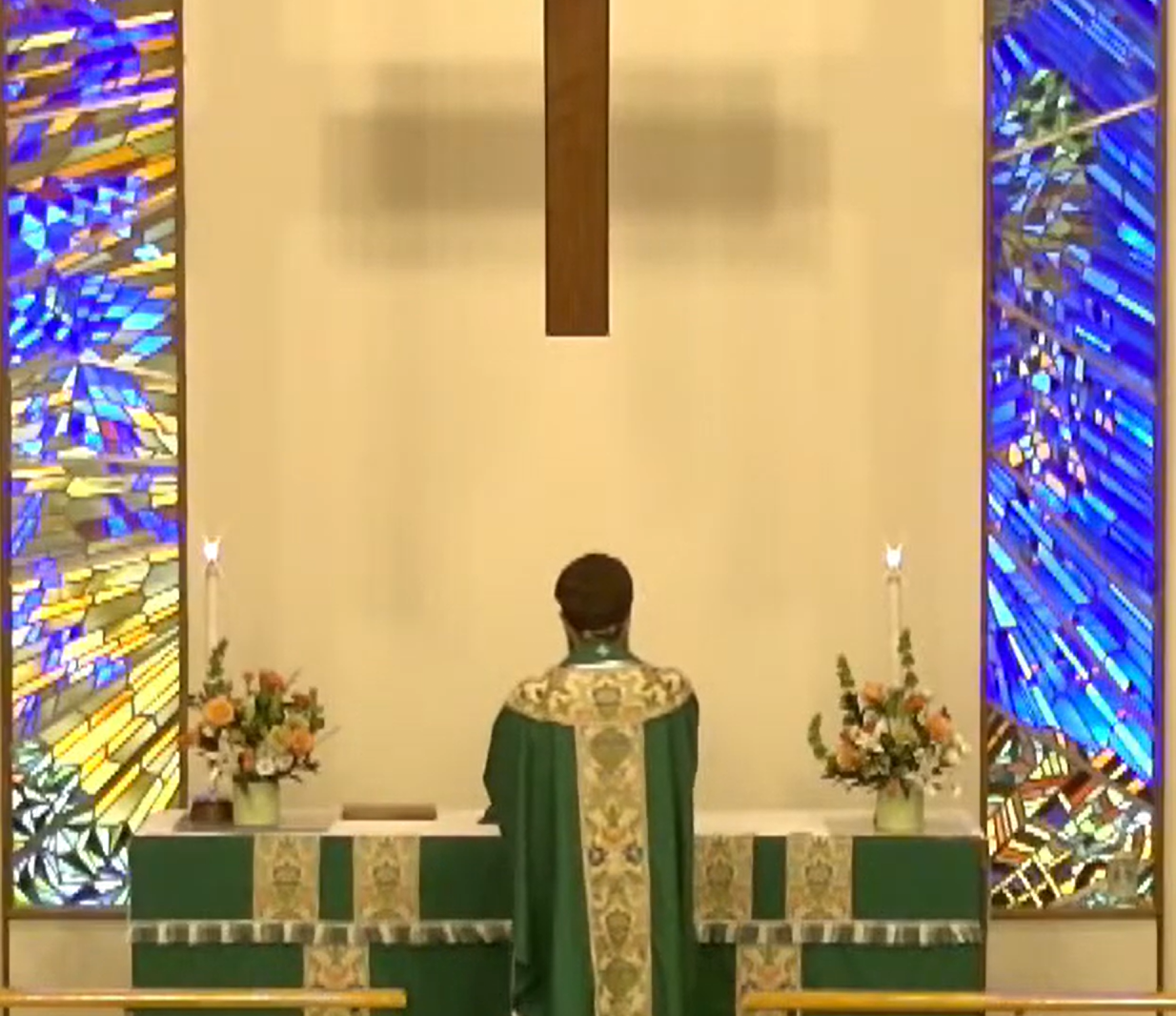
The High Mass at St. Thomas involves a distinct smell, sound, and orientation.
The smell comes from the incense and is truly heavenly – in Revelation 8:3-4, John talks about worship in heaven involving the smoke of incense, along with the prayers of the saints, rising before God.
The sound comes from chant – so instead of the majority of liturgy being spoken, it is sung, and from bells, which are rung at certain points in the Eucharistic prayer. The practice of chanting the liturgy arose in the early church, and the use of bells was designed to hold people’s attention at particularly important parts of the Mass.
The distinct orientation comes from everyone, including the priest, facing the altar (or liturgical east). This invokes the sense that everyone is praying together “facing” God, as opposed to the priest facing the people, which can give the feeling of a performance by the priest for the people.
Why Worship Like This?
A High Mass highlights beauty, mystery, and transcendence in our worship of God.
Beauty is a reflection of God’s nature, and the otherworldly beauty of the high mass reflects the beauty of the kingdom of heaven.
Mystery is always part of our encounter with God; think about the dark cloud that Moses approaches on Mount Sinai. God will always be beyond our understanding and knowledge.
Transcendence: As one of our Eucharistic prayers puts it, God is “dwelling in light inaccessible from before time and forever” (Eucharistic Prayer D).
Anyone who is curious about the service is welcome to join us!
If you would like to receive the Sacrament of the Reconciliation of the Penitent (confession), contact Fr. Will @ will.drosos@stthomasmcleanva.org